

The closing process involves the journal entries to close revenue and expense accounts as part of the regular accounting cycle. An Income Summary Account, in accounting, is a temporary account used in the closing process to transfer the balances of revenue and expense accounts. In contrast, when there is a loss incurred, the debit side has more value than the credit side of the account. Disposable income is an individual or household’s total income minus any taxes owed. It includes earnings from wages, salaries, investments, and other income sources.
- Expense transactions play a vital role in influencing the income summary account, especially in the context of managing financial performance over a specific fiscal year.
- CFI is the global institution behind the financial modeling and valuation analyst FMVA® Designation.
- Accounts are considered “temporary” when they only accumulate transactions over one single accounting period.
- This process updates retained earnings and resets the income summary account to zero.
- The accounts are closed to prevent their balances from being mixed with the balances of the next accounting period.
- Zeroing out the balances provides a clean slate for the new period’s performance calculation.
- At the end of an accounting period, the account of income summary is utilized for closing-entry recording.
What Are Operating Expenses? Small Business Guide
First, input historical data for any available time periods into the income statement template in Excel. Format historical data input using a specific format in order to be able to differentiate between hard-coded data and calculated data. As a reminder, a common method of formatting such data is to color any hard-coded input in blue while coloring calculated data or linking data in black. After preparing the skeleton of an income statement as such, it can then be integrated into a proper financial model to forecast future performance. After deducting all the above expenses, we finally arrive at the first subtotal on the income statement, Operating Income (also known as EBIT or Earnings Before Interest and Taxes).
Income Summary Meaning in Accounting (Helpful Overview)
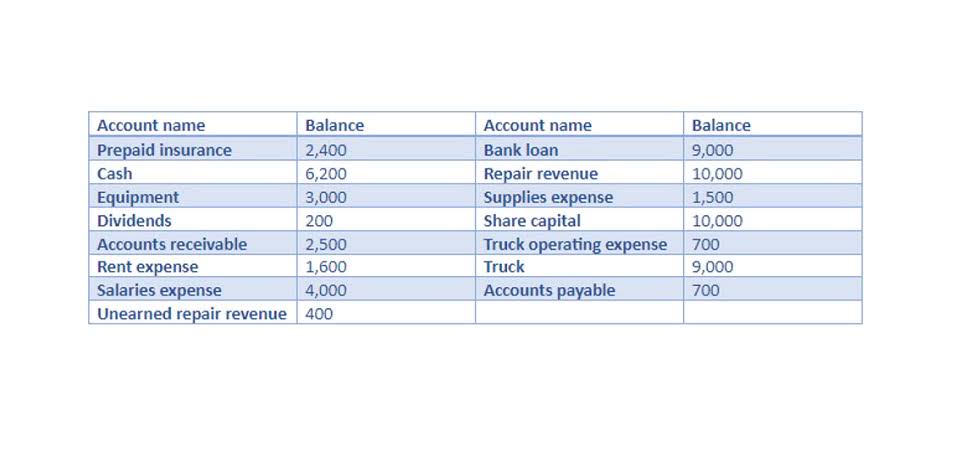
The second step requires closing all expense accounts, which typically carry debit balances. Each individual expense account, such as Salary Expense or Rent Expense, is closed by crediting the account for its full balance. The Income Summary account determines the company’s profitability balance sheet by aggregating revenues and expenses before the net result is transferred to permanent equity accounts.
Calculating Net Income or Loss
The Income Summary account is a temporary account used in the closing process of accounting to summarize the revenue and expenses for a specific period. It serves as an intermediary step between the revenue and expense accounts and the capital accounts, allowing for the distribution of net income or loss to the partners’ capital accounts in a partnership. Closing entries are posted in the general ledger by transferring all revenue and expense account balances to the income summary account. Then, transfer the balance of the income summary account to the retained earnings account. In short, we can clear all temporary accounts to retained earnings with a single closing entry. By debiting the revenue account and crediting the dividend and expense accounts, the balance of $3,450,000 is credited to retained earnings.
Let us understand how to calculate the income of a company or an individual through the discussion below. This balance must now be transferred to the permanent equity account (Retained Earnings or Owner’s Capital). If the Income Summary account has a $15,000 credit balance (Net Income), the entry is a Debit to Income Summary and a Credit to Retained Earnings or Owner’s Capital for $15,000.
Step 1: Close revenue accounts

Companies must carry over balances from one year to another for the next accounting period. Journal entries made at the end of an accounting period to transfer temporary account balances income summary account definition to permanent accounts. Instead of sending a single account balance, it summarizes all the ledger balances in one value.
Balance Sheet
This action transfers their balances to the Retained Earnings Account, which reflects the cumulative sum of the company’s profits and losses over time. This process is part of the closing entries at the end of the accounting cycle. After recording all revenue and expense transactions in their respective accounts, the balances from these accounts are transferred to the Income Summary Account. Thus, accumulating revenue and spending totals before the resulting profit or loss is passed through to the retained earnings account. It can, however, provide a useful audit trail by demonstrating how these aggregate amounts were carried through to retained earnings. If the resulting balance in the account is a profit (a credit balance), debit the income summary account and credit the retained earnings account to shift the profit into retained earnings.
However, you might wonder, where are the revenue, expense, and dividend accounts? These accounts Medical Billing Process were reset to zero at the end of the previous year to start afresh. On expanding the view of the opening trial balance snapshot, we can view them as temporary accounts, as can be seen in the snapshot below.
Automate Closing Entries with Deskera

Please download CFI’s free income statement template to produce a year-over-year income statement with your own data. There is no gross profit subtotal, as the cost of sales is grouped with all other expenses, which include fulfillment, marketing, technology, content, general and administration (G&A), and other expenses. It is common for companies to split out interest expense and interest income as a separate line item in the income statement.
HighRadius Named as a Leader in the 2024 Gartner® Magic Quadrant™ for Invoice-to-Cash Applications
Our program is specifically developed for you to easily set up your closing process and initiate book closing within seconds – no prior technical knowledge necessary. Once we have obtained the opening trial balance, the next step is to identify errors if any, make adjusting entries, and generate an adjusted trial balance. In this blog, we will discuss the income summary account in detail and understand how to calculate it with some real-world examples.